Organizing tips
Start Small: How One Shelf Brought Calm to My Closet
You don’t have to tackle the whole closet.

Organizing tips
You don’t have to tackle the whole closet.
I looked at my closet and it made me feel so tired and overwhelmed. I have fallen behind on keeping it up, and I know I would feel better if I could clear it up, but my time and energy were limited. So I didn’t take on the whole thing. I picked one small section and gave it my full attention.
It turns out you don’t need a whole weekend or a full closet makeover to feel the difference. One shelf done well brings a surprising amount of calm, and you get that peace without the overwhelm of a big project hanging over you.
Here’s how I did it, so you can try it in your own space.
The chaos was real. My shelf had become a landing spot for anything I didn’t feel like putting away: sweatshirts, purses, belts, and a bathrobe in a heap. The cubbies beside it weren’t much better. These are the spaces where I toss my clothes I end up not wearing, or ones that aren’t dirty enough to put in the laundry but aren’t clean enough to hang back up.
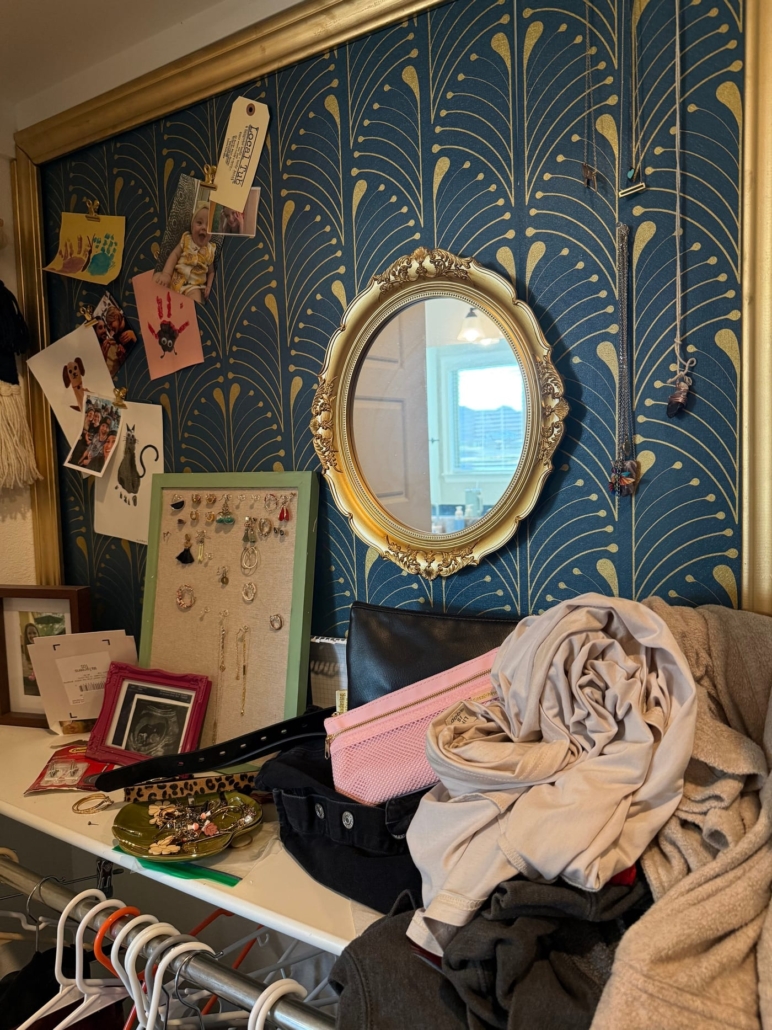
Start by taking everything out of the section you chose. Seeing it all at once shows you how much is really there.
Then make three piles:
Make quick decisions. The longer you hold an item, the more reasons you’ll find to keep it. If you get stuck, ask yourself:
You’re not trying to get rid of everything. You’re making room for the things you actually use and love.
Before anything goes back in, stop and think about what you want this space to do for you. It’s tempting to just put things back where they were, but that’s how the clutter came back in the first place.
For me, this shelf is where I put on my jewelry every morning. So I cleared the surface and moved my earring board up onto the wall next to the mirror, with necklaces hanging alongside. Now everything I need is in one spot at eye level, and the shelf stays open instead of turning into a catch-all.
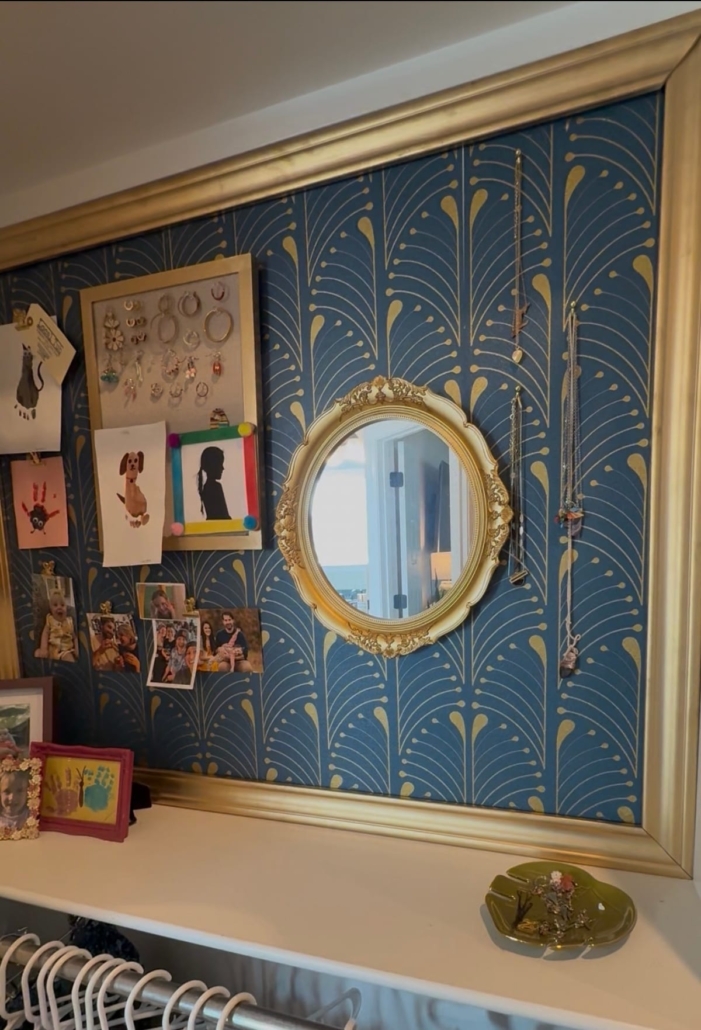
Give your space one clear job, then put back only what supports that job.
Containers are what make a space look calm, even when what’s inside isn’t perfectly folded. I used three matching fabric bins on the open shelves and gave each one a single category:
When like items live together, you always know where to look and where to put things back. Matching containers also cut down on visual noise, which is a big part of why the finished space feels so peaceful.
Drag the slider to compare before and after.
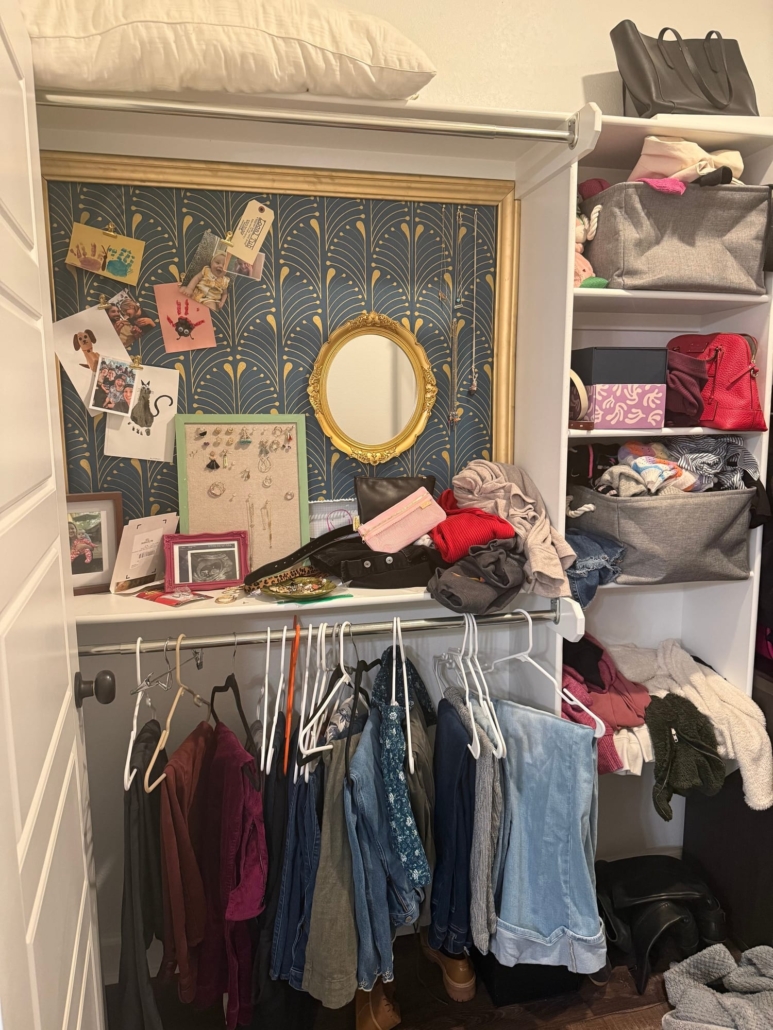
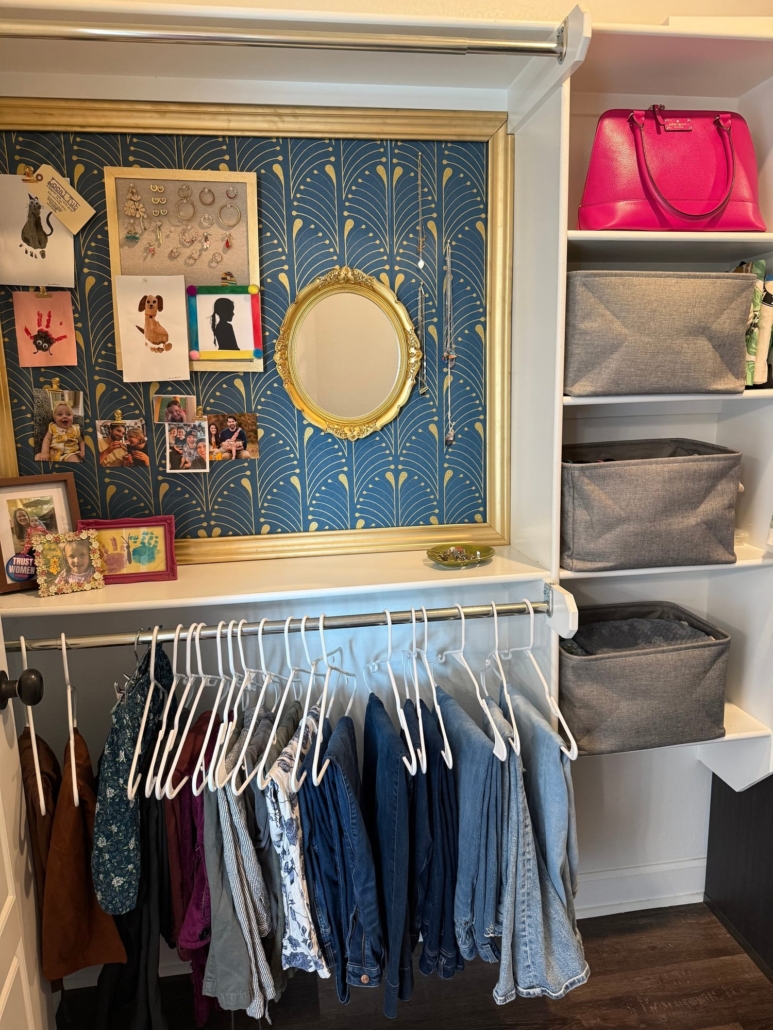
The best systems start with how you already use a space. Don’t build something that only works if you suddenly become a different person. Look at what you naturally do, then make it a little better.
I’m always balling up my bathrobe and tossing it on the bottom shelf. Instead of fighting that habit, I gave it a home. Now the bathrobe still gets tossed on the bottom shelf, but it lands in a basket, and the whole closet looks tidy.
The secret to a system that lasts is making it easy. If putting something away takes more effort than leaving it out, it won’t get put away.
Pick one small spot this week, like a shelf, a drawer or a single cubby. Take everything out, make quick decisions, decide what you want the space to do, and give everything a home that fits how you actually live.
If you’d like help creating systems that work for your family, I’d love to help. Get in touch here.